
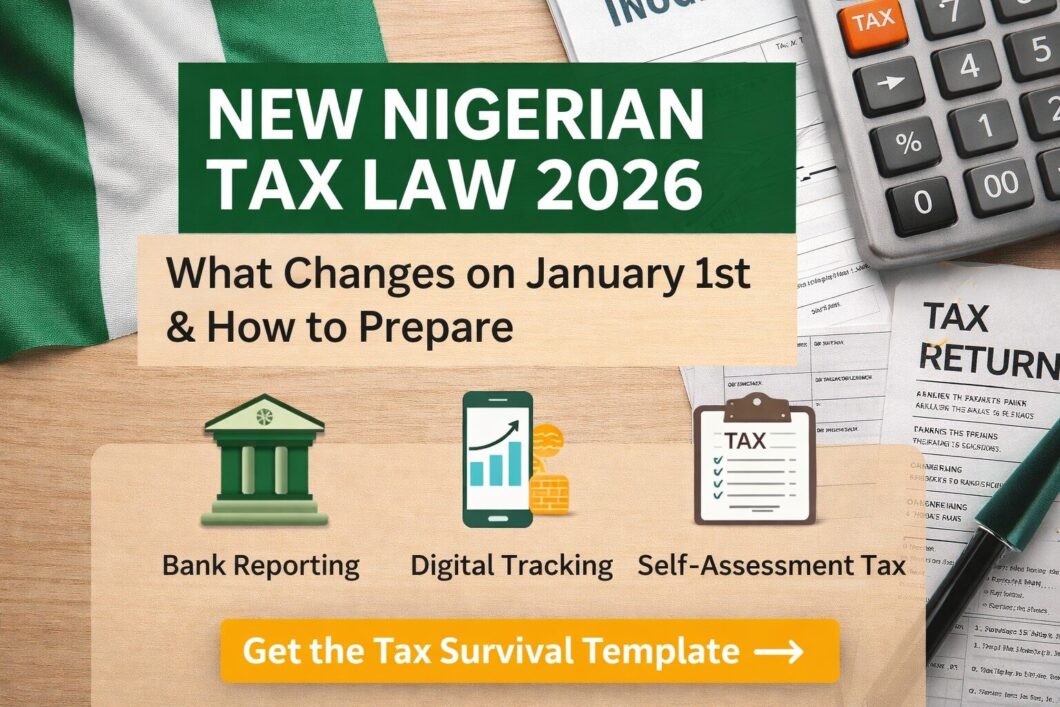
Introduction: 2026 Will Change How Nigerians Pay Tax
From January 1st, 2026, Nigeria’s tax system will enter a new phase.
The government is tightening compliance, expanding the tax net, and using digital tools to monitor income more closely than ever before. For freelancers, creators, side-hustlers, consultants, small business owners, and professionals, this is not a minor update.
It is a structural shift.
If you earn income outside traditional employment online, locally, or in foreign currency, you will be affected.
This guide explains:
- What the new tax law changes mean in practical terms
- Who will be most affected
- Why “ignoring tax” is no longer an option
- How to prepare before penalties begin
- How to stay compliant without stress or overpaying
No legal jargon. Just real Nigerian context.
What Is the New Tax Law Taking Effect in 2026?
The 2026 tax reforms are focused on visibility, digital tracking, and enforcement.
In simple terms, the government is no longer waiting for people to voluntarily declare income. Instead, it is connecting data points across banks, fintechs, digital platforms, and payment processors.
The goal is straightforward:
If money touches your account consistently, it becomes taxable.
Key Focus Areas of the 2026 Tax Reform
- Digital income tracking
- Bank account monitoring
- Platform data sharing
- Stronger penalties for non-compliance
- Wider enforcement of self-assessment tax
Who Will Be Most Affected by the 2026 Tax Law?
If you fall into any of these categories, this law applies directly to you:
- Freelancers (Upwork, Fiverr, direct clients)
- Content creators (YouTube, TikTok, Instagram, X)
- Consultants and coaches
- Side hustlers with regular inflows
- Business owners operating without structure
- Nigerians earning foreign income
- Professionals with multiple income streams
- People receiving frequent bank credits without tax history
This reform is not aimed only at “big earners.”
Consistency matters more than size.
Major Changes You Must Understand Before 2026
1. Increased Bank Reporting
Banks are now required to flag:
- Unusual inflow patterns
- Frequent large credits
- Foreign currency inflows
- Business-like transactions on personal accounts
If your account activity does not match your tax records, it raises red flags.
2. Digital Platforms Will Share Data
Payment platforms and marketplaces now maintain structured income records.
This includes:
- Freelance platforms
- Fintech wallets
- Subscription platforms
- App stores
- Ad monetization platforms
Tax authorities no longer rely on guesses.
They rely on data trails.
3. Self-Assessment Tax Becomes Non-Optional
If you earn outside PAYE employment, you are expected to:
- Register for tax
- File annual returns
- Declare income
- Claim deductions properly
Failure to do so is now easier to detect.
4. Penalties Will Be Enforced Aggressively
Under the new system:
- Late filing attracts monthly penalties
- Non-filing can trigger account restrictions
- Tax Clearance Certificates (TCC) become mandatory for more activities
Why Most Nigerians Will Overpay Tax in 2026
Here’s the irony.
Many people fear taxes because they think:
“They will take too much from me.”
In reality, most people overpay because they don’t understand deductions.
Without proper records:
- Expenses are ignored
- Reliefs are lost
- Income is overstated
- Taxes become inflated
This is where structure becomes your advantage.
What Income Is Taxable Under the New Law?
If you live in Nigeria, your global income is taxable, including:
- Freelance income
- Consulting fees
- Brand deals
- Digital product sales
- Training & coaching
- Online services
- Foreign remittances (when income-linked)
- Side hustle revenue
Whether paid in naira or dollars, income remains income.
Allowable Deductions Nigerians Often Miss
The law allows you to deduct legitimate business expenses, including:
- Internet & data
- Power, fuel, solar costs
- Software subscriptions
- Equipment (phones, laptops)
- Training & certifications
- Marketing & ads
- Workspace costs
- Professional services
These deductions can reduce your taxable income by 40–60% if tracked properly.
Most people miss this because they don’t track.
How to Prepare Before January 1st, 2026
Step 1: Get a Tax Identification Number (TIN)
This is your entry point into the system.
Step 2: Separate Personal and Income Records
Even if you use one bank account, you must track:
- Income sources
- Client payments
- Dates
- Purpose
Step 3: Track Income and Expenses Monthly
Waiting until year-end creates panic and errors.
Consistency reduces stress.
Step 4: File Annual Returns Early
Tax filing runs January to March.
Late filing costs money.
The Smart Way to Stay Compliant (Without Stress)
Most Nigerians fail at tax because they rely on memory, bank alerts, or guesswork.
That is why I created the Tax Survival Template.
What the Tax Survival Template Does
- Tracks all income
- Categorizes expenses automatically
- Calculates estimated tax
- Organizes deductions
- Stores client & invoice records
- Helps you file confidently
It is built specifically for:
- Freelancers
- Creators
- Side hustlers
- Consultants
- Small business owners
👉 Get the Tax Survival Template here
Why Tax Compliance Is Now a Wealth Tool
In 2026, tax compliance will unlock:
- Access to loans
- Business registration
- Visa applications
- Property purchases
- Corporate contracts
- Financial credibility
Avoiding tax no longer gives freedom.
Structure does.
How This Fits Into My Broader Wealth Framework
Tax is not separate from wealth building.
It connects directly to:
- Income growth
- Asset acquisition
- Business scaling
- Financial credibility
This is why wealth management is part of the frameworks I teach in:
Wealth without structure collapses.
Frequently Asked Questions (FAQs)
1. Does the new tax law apply to freelancers?
Yes. All freelancers and self-employed individuals must comply.
2. Are foreign earnings taxable in Nigeria?
Yes, if you reside in Nigeria.
3. Can I still reduce my tax legally?
Yes. Through allowable deductions and reliefs.
4. What happens if I don’t file tax?
Penalties, account restrictions, and inability to obtain TCC.
5. When should I start preparing?
Now. Waiting until 2026 increases risk.
Final Thoughts: 2026 Is About Visibility
The new tax law is not designed to formalize income.
Those who prepare early will:
- Pay less tax
- Avoid penalties
- Build credibility
- Scale faster
Those who ignore it will struggle.
If you want a stress-free tax system, get the Tax Survival Template today.
Your income is growing.
Your structure must grow with it.