
Introduction: Why Investing in Nigeria Matters
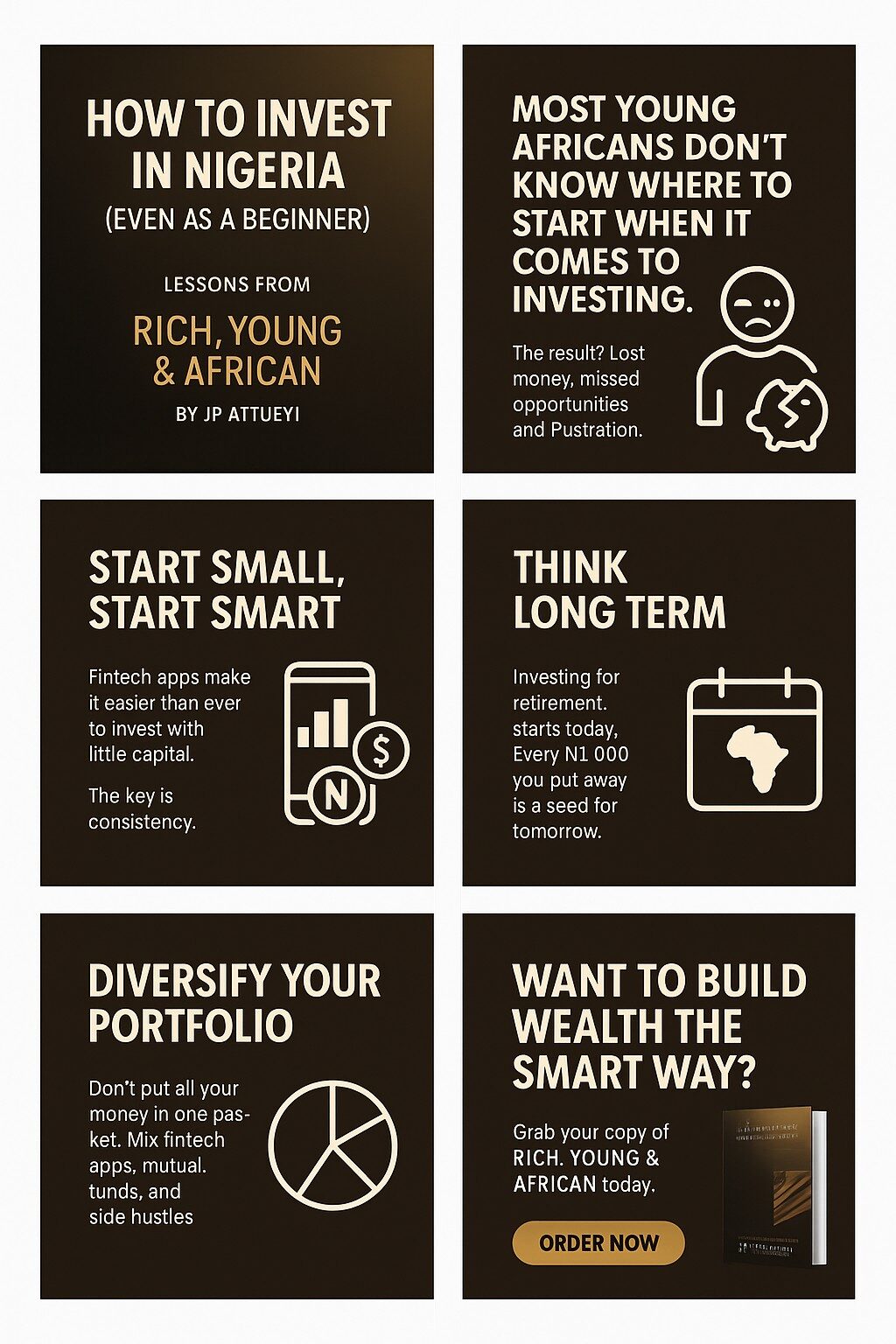
Nigeria is often described as the “land of opportunities,” but for many young Africans, the big question is: where do I start?
The truth is you don’t need millions to start investing. You need the right knowledge, mindset, and tools. That’s exactly why I wrote my book Rich, Young & African and created resources like my Budgeting Template and Side Hustle eBooks to help you grow your money in a practical, sustainable way.
In this article, we’ll cover:
- How and where to invest in Nigeria
- How beginners can start investing
- How to invest for daily returns
- Retirement-focused investing
- The rise of fintech apps in Nigeria
Let’s dive in.
1. How and Where to Invest Money in Nigeria
There are multiple investment opportunities in Nigeria, but not all are safe or profitable. Here are some popular and reliable ones:
- Stocks & Bonds: Buying shares of Nigerian companies through the NGX (Nigerian Exchange Group) or treasury bonds is a great way to grow wealth long-term.
- Real Estate: With rapid urbanization, property investment (even land in developing areas) continues to yield high returns.
- Agriculture: Platforms now allow you to invest in farming projects and share profits after harvest.
- Mutual Funds & ETFs: Managed by professionals, these give you diversified exposure with less stress.
- Entrepreneurship: Your own side hustle can be the best “investment” if you structure it well.
👉 If you’re unsure where to start, my eBook No Capital? No Problem will show you how to leverage everyday opportunities to build income streams.
2. How to Invest for Beginners
Starting small is better than waiting for the “perfect” time. Here’s a roadmap for beginners:
- Get your finances in order – Track your spending with my Budgeting Template to know what you can realistically invest.
- Start with low-risk investments – Treasury bills, savings bonds, and mutual funds are ideal.
- Use fintech apps – Apps like PiggyVest, Cowrywise, and Bamboo make investing simple with as little as ₦1,000.
- Reinvest returns – Instead of withdrawing profits immediately, reinvest to accelerate growth.
💡 Pro Tip: Focus on consistency rather than big amounts. Even ₦5,000 monthly investments compound over time.
3. How to Invest and Make Money Daily
Yes, daily income investments exist, but beware of scams that promise “get-rich-quick” returns. Here are legit ways:
- Daily Savings Interest Apps: Some fintechs give small daily returns if you lock in funds.
- Micro-lending: Platforms allow you to lend money in small amounts and earn interest.
- Side Hustles as Investments: A digital product or service (e.g., selling templates, ebooks, or reselling airtime/data) can give you daily profits.
👉 This is why my Free Hustler’s Cheat Sheet helps young Africans plan realistic ways to generate consistent income daily, weekly, and monthly.
4. How to Invest for Retirement in Nigeria
Many Nigerians only think of retirement when it’s too late. Here’s how to get ahead:
- Pension Funds (RSA): Mandatory for formal sector employees, but you can make voluntary contributions to boost your retirement account.
- Real Estate: Land and rental property remain the most reliable retirement income streams.
- Dividend Stocks: Invest in companies with strong dividend histories.
- Long-Term Mutual Funds: Safe and managed by professionals.
💡 Rule of thumb: Start early, even if it’s small. Waiting costs more than you realize.
If you’re serious about preparing for retirement, I expand on this in Rich, Young & African, where I teach how young Africans can break generational poverty cycles. It is available in Soft and Hard copies. You can also get it on Amazon.
5. How to Invest with Fintech Apps
Nigeria’s fintech revolution has made investing more accessible than ever. With just a smartphone, you can:
- Save automatically (PiggyVest, Cowrywise)
- Buy U.S. stocks (Bamboo, Trove, Chaka)
- Invest in real estate (Risevest, Coreum)
- Lend and earn interest (FairMoney, Renmoney)
The beauty is that most of these apps allow you to start with as little as ₦1,000.
👉 For beginners, my Free Budgeting Template pairs perfectly with fintech apps. Track what you save and see exactly how your money is working for you.
Passive vs Active Investing
- Active Investing means managing your investments yourself: picking stocks, monitoring markets, adjusting frequently.
- Passive Investing means investing in index funds, mutual funds, or automated portfolios with minimal effort.
Most beginners in Nigeria should start with passive investing for safety and ease. Over time, you can mix in active plays like real estate or entrepreneurship.
FAQs About Investing in Nigeria
Q: Can I start investing with ₦5,000?
Yes. Many fintech apps and mutual funds allow you to begin small. The key is consistency.
Q: What’s the safest investment in Nigeria?
Government bonds and treasury bills are among the safest. They’re low risk, though returns are modest.
Q: How do I avoid investment scams?
Stick with regulated institutions, confirm SEC registration, and remember: if it promises “too much too fast,” it’s a scam.
Final Thoughts: Start Where You Are
Investing in Nigeria doesn’t require luck; it requires discipline and knowledge. Whether you want daily income, retirement security, or long-term growth, the key is starting with what you already have.
📘 Next Steps:
- Read Rich, Young & African to learn the mindset shifts needed for wealth creation.
- Download my Free Budgeting Template to free up money for investments.
- Explore my Side Hustle & Debt eBooks for practical ways to earn and manage money.
- Join my Master Your Money group (25% off) if you’re serious about mastering personal finance.
The best investment you can make today? In your own financial literacy. And I’m here to guide you every step of the way.