
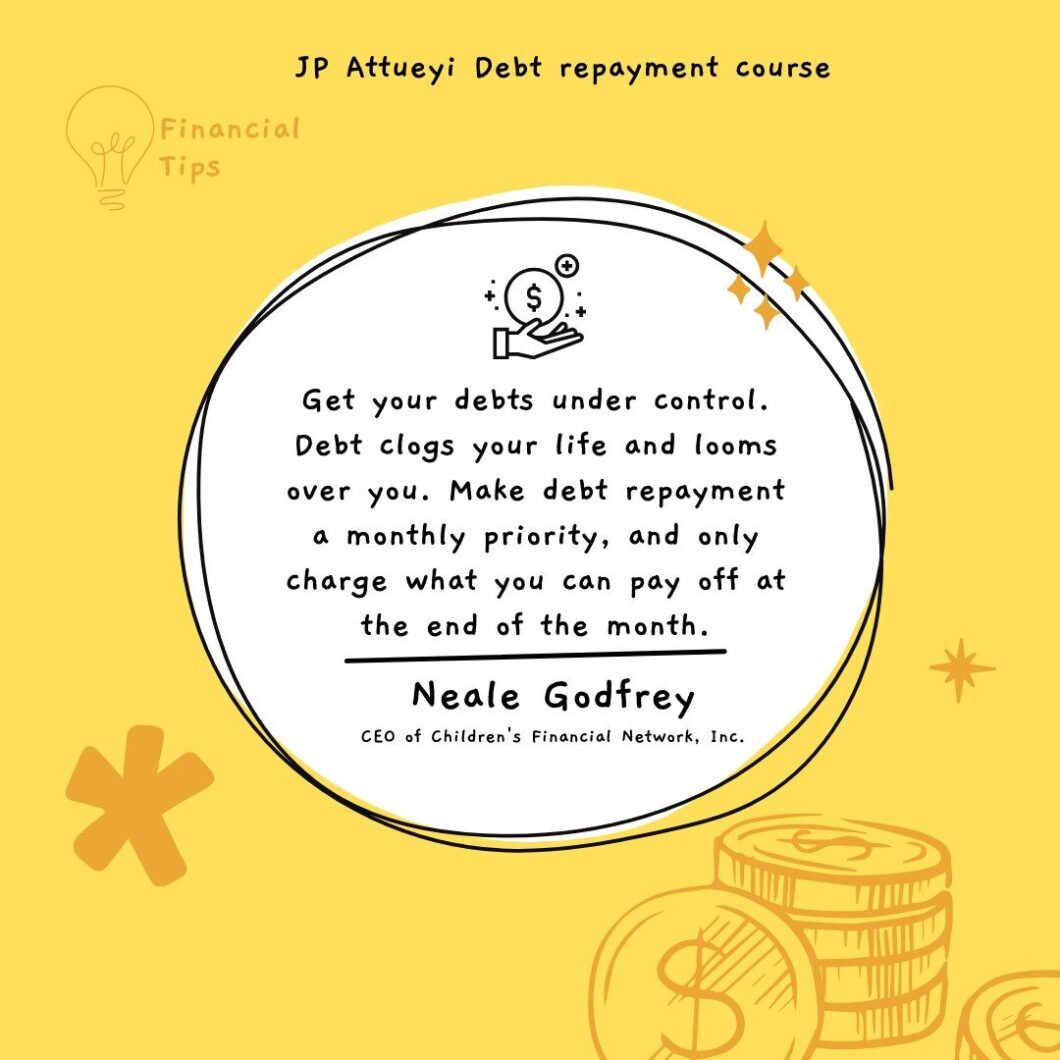
Debt is one of those financial topics that sparks fear, confusion, and sometimes even shame. But the truth is this: debt is not automatically bad. What matters is how you manage it. In this post, I’ll walk you through the basics of debt, the difference between good and bad debt, debt financing concepts, and practical steps to get out of debt fast, all tailored to the African context.
Along the way, I’ll share resources from the Rich, Young & African (RYA) brand that will help you take charge of your financial journey.
What Debt to Pay Off First
If you’re juggling multiple debts, maybe a bank loan, salary advance loan, or money from loan apps, the question is always: which one should I pay off first?
Two proven strategies stand out:
- The Debt Snowball Method
- Pay off the smallest debt first (regardless of interest rate).
- Builds momentum and motivation.
- The Debt Avalanche Method
- Pay off the debt with the highest interest rate first.
- Saves more money in the long run.
👉 For Nigerians dealing with high-interest loan apps, the avalanche method often makes the most sense, because some loan apps charge interest rates as high as 20–30% per month.
📘 Tip: Use my Debt Repayment Template to map out your balances and see which strategy works best for you. (Available to newsletter subscribers.)
Good Debt vs. Bad Debt
Not all debt is created equal.
- Good Debt → Debt that builds wealth or appreciates in value.
- Example: A mortgage, a business loan to expand operations, or a student loan (if it significantly increases earning potential).
- Bad Debt → Debt that drains your money without building assets.
- Example: Loan apps for day-to-day expenses, credit cards for luxury shopping, or borrowing for parties.
The key is this: if the debt won’t make you more money tomorrow, it’s probably bad debt.
Debt and Equity Financing (Simplified)
If you run a business, you’ve probably heard about debt financing vs. equity financing.
- Debt Financing = Borrowing money (from banks, investors, or bonds) and repaying with interest.
- Equity Financing = Selling part of your business (shares) to raise money.
For small business owners in Nigeria, debt financing is often easier (banks, microfinance, or even family). But equity financing can give you breathing room since you don’t need to repay immediately; you just share profits.
Debt-Equity Ratio (Formula)
The debt-to-equity ratio shows how much of your company is financed by debt compared to equity.
Formula:
Debt-to-Equity Ratio = Total Debt / Total Shareholders’ Equity
- A ratio above 2:1 means you’re highly dependent on debt.
- A ratio below 1:1 means you’re running a safer, equity-backed business.
This ratio is critical for startups and SMEs in Africa looking for investors.
How to Get Out of Debt Fast
- Stop Borrowing to Survive → Cut off loan apps and buy only essentials.
- Track Every Naira → Use a simple budgeting tool (like my free Budgeting Template).
- Increase Your Income → Start a side hustle (teaching, e-commerce, freelancing).
- Negotiate Your Debt → Sometimes banks or lenders will restructure repayments.
- Stay Accountable → Share your debt-free journey with a mentor or peer.
💡 Practical Tip: Commit just 10 minutes weekly to review your finances. Small actions compound into financial freedom.
Quick FAQs on Debt
1. Is it bad to have debt?
Not always. Debt becomes dangerous when it funds consumption instead of wealth-building.
2. What’s the fastest way to get out of debt?
Combine the avalanche method with an additional income stream (side hustle).
3. Can debt ever make me rich?
Yes. If used for productive investment — e.g., buying land, starting a business, or professional development.
Final Thoughts
Debt doesn’t have to define you. It can either trap you or propel you forward, depending on how you use it.
That’s why I wrote Rich, Young & African, a book that shows young Africans how to build wealth from scratch, avoid bad debt, and leverage opportunities that most people overlook.
👉 Start your journey today:
- Buy the book Rich, Young & African
- Download the Budgeting & Debt Repayment Templates
- Enroll in the RYA Master Your Money Course
Remember: wealth is a mindset, and debt is just one chapter of the story.
🔗 Explore more from RYA: