
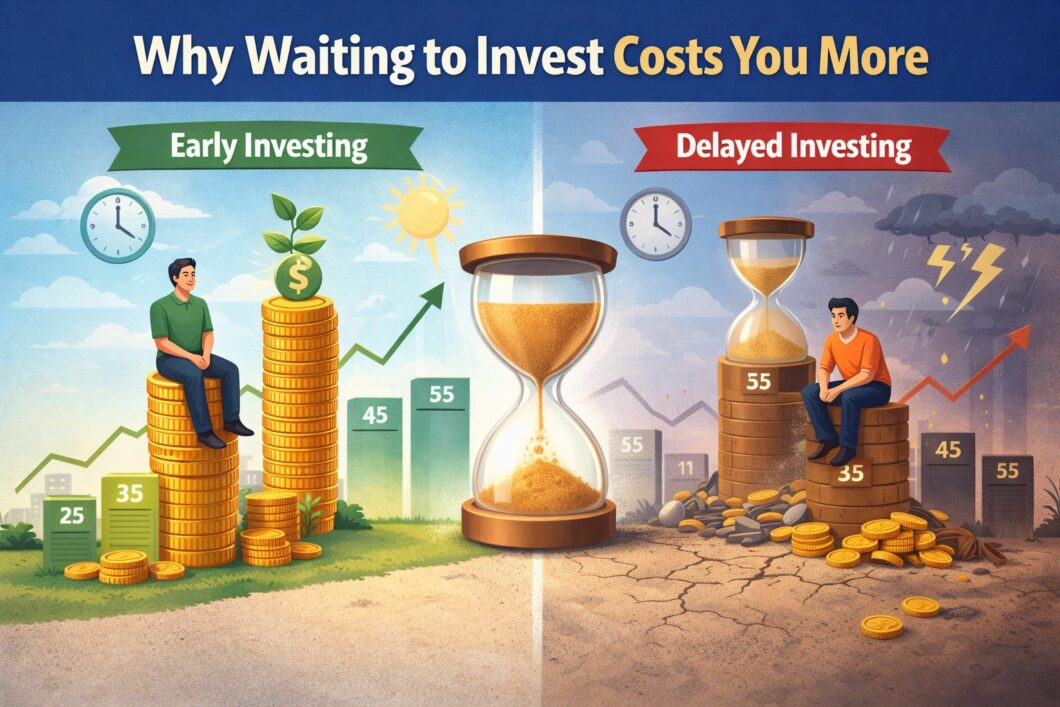
Many Nigerians believe they are being cautious by waiting to invest.
“I’ll invest when I earn more.”
“I’ll invest after I clear all my bills.”
“I’ll invest when things stabilize.”
It sounds responsible.
It feels safe.
But in reality, waiting to invest is one of the most expensive financial decisions you can make because you lose time, and time is the most powerful asset in wealth building.
This article is not about rushing into risky investments.
It is about understanding the hidden cost of delay.
In this article, you will learn:
- Why waiting feels safe but is financially dangerous
- How inflation silently punishes delayed investors
- The math behind compounding and lost time
- Why most people confuse preparation with procrastination
- How to start investing correctly without pressure
- How this fits into a structured wealth framework
No “get rich quick.”
Just clarity.
The Illusion of Safety in Waiting
Most people think waiting to invest is a risk reduction strategy.
It is not.
It is a risk transfer from visible risk to invisible risk.
When you wait:
- Inflation continues
- Purchasing power erodes
- Opportunities compound without you
- Time passes permanently
You may avoid short term losses, but you guarantee long-term underperformance.
This is why two people with similar incomes can end up in completely different financial positions. It is not about who is smarter; it is about who started earlier.
The Math of Waiting: Compounding Is Not Forgiving
Compounding rewards time, not effort.
Let’s simplify:
- Investor A starts investing ₦50,000 monthly at age 25
- Investor B waits and starts the same ₦50,000 at age 35
Assuming similar returns:
Investor A does not just earn more; Investor A earns exponentially more, even though both invested the same amount monthly.
Why?
Because:
- Early investments compound longer
- Returns generate returns
- Time multiplies outcomes
When you delay investing, you are not pausing growth.
You are deleting future gains.
Time lost cannot be recovered with higher contributions later.
Inflation: The Silent Punishment for Non Investors
Many people believe that “keeping money safe” means holding cash.
In reality, cash is one of the riskiest long term positions in an inflationary economy like Nigeria’s.
When inflation rises:
- Your savings buy less
- Your emergency fund shrinks in real value
- Your future goals move further away
If your money is not growing faster than inflation, you are moving backward quietly.
This is why people say:
“I earn more now, but life is harder.”
It is not imagination.
It is mathematics.
Why People Delay Investing (And What’s Really Going On)
1. They Confuse Readiness with Perfection
Many people wait for the “perfect” moment:
- Zero debt
- Higher income
- Full clarity
- Total confidence
That moment rarely arrives.
Wealth is built through progressive readiness, not perfection.
2. They Fear Making Mistakes
Fear of loss keeps many people frozen.
But check this out:
- Mistakes made early are cheaper
- Errors teach faster than theory
- Small losses early prevent catastrophic losses later
Avoiding all mistakes guarantees stagnation.
3. They Skip the Foundation
Some people delay investing because they intuitively know they are not financially stable.
This instinct is correct, but the response is wrong.
The solution is not waiting endlessly.
The solution is building structure first.
Investing Without Structure Is Gambling
This is where many people get it wrong.
Waiting to invest is costly but rushing to invest without structure is worse.
If:
- Your budget is unclear
- Your debt is overwhelming
- Your income is unstable
- You panic during small losses
Then investing will feel stressful, not empowering.
This is why in Rich, Young & African, wealth is taught as a sequence, not a shortcut:
- Control your money
- Reduce financial pressure
- Stabilize cash flow
- Then invest consistently
Skipping steps creates anxiety.
Following structure creates confidence.
The Real Opportunity Cost of Waiting
The biggest cost of waiting to invest is not money.
It is:
- Lost confidence
- Delayed learning
- Missed habit formation
- Prolonged financial dependence
Investing early does three powerful things:
- It builds discipline
- It normalizes long term thinking
- It shifts your identity from spender to builder
People who start early do not just earn more.
They think differently about money.
“I Don’t Earn Enough Yet”: The Most Common Excuse
Income matters.
But behavior matters more.
Many high earners delay investing.
Many moderate earners invest consistently.
The difference is not income.
It is intentionality.
If you cannot invest ₦20,000 consistently now, earning ₦500,000 more will not magically fix discipline.
This is why No Capital? No Problem focuses on:
- Income ready skills
- Side income creation
- Cash flow expansion without pressure
More income supports investing but structure precedes income.
How to Start Investing the Right Way (Without Pressure)
Step 1: Build Control First
Before investing, ensure:
- You track expenses
- You understand your monthly surplus
- You have basic budgeting discipline
If you do not control money, investments will feel like punishment.
This is why tools like the budgeting template matter; they create clarity.
Step 2: Eliminate High Interest Debt
Debt with high interest destroys investment gains.
Clearing or managing debt is not delaying investing; it is protecting future returns.
This principle is central to the Ultimate Debt-Free Blueprint.
Step 3: Start Small, Stay Consistent
You do not need large capital.
You need:
- Consistency
- Patience
- A long-term lens
Investing small beats waiting perfectly.
Why Starting Early Is Less Stressful Than Starting Late
Late starters feel pressure.
Early starters feel flexibility.
When you start early:
- You can take calculated risks
- You can learn gradually
- You are not desperate for quick returns
When you start late:
- Every dip feels painful
- Every mistake feels costly
- Emotions override logic
Early investing buys psychological peace, not just returns.
How This Fits Into My Wealth Framework
My wealth philosophy is simple:
- Structure beats motivation
- Sequence beats shortcuts
- Control beats chaos
Across my work:
The message is consistent:
Wealth delayed is not always wealth denied; but wealth ignored is.
Waiting is not neutral.
It is a decision.
Frequently Asked Questions (FAQs)
1. Is it better to wait for a large amount before investing?
No. Time matters more than size.
2. Should I invest if I still have debt?
High interest debt should be addressed first.
3. What if I invest and lose money?
Losses are part of learning. Small, early losses are cheaper than late mistakes.
4. How much should I invest monthly?
Start with what is sustainable. Consistency matters more than amount.
5. Is investing only for high income earners?
No. Discipline scales better than income.
Final Thoughts: Waiting Is a Costly Comfort
Waiting to invest feels safe.
But safety without growth is erosion.
You do not build wealth by timing perfection.
You build wealth by starting responsibly and staying consistent.
Your future self will not thank you for waiting.
Your future self will thank you for starting early, even imperfectly.
Structure today creates freedom tomorrow.